
Gear
The Ten Essentials for day hikes
The Ten Essentials are what experienced hikers carry on every trip, even a short one, so that a twisted ankle or a wrong turn doesn’t turn into a night out without help.
In short
- Navigation, headlamp, sun protection, first aid, knife, fire, shelter, extra food, extra water and extra clothes.
- For a day hike they weigh a couple of pounds and fit in a small daypack.
- Free one-page day hike checklist below.
The Ten Essentials
The list comes from The Mountaineers, a Seattle climbing club, and has been updated over the years to group the items by job:
- Navigation: a map, a compass and a phone or GPS with the route downloaded. Phones die; paper doesn’t.
- Headlamp: with spare batteries. Hikes take longer than planned more often than you’d think.
- Sun protection: sunglasses, sunscreen and a hat. At altitude and on snow you burn fast.
- First aid: a small kit with blister care, any medicine you need, and tweezers for ticks and splinters.
- Knife: a small knife or multi-tool for repairs and first aid.
- Fire: a lighter or waterproof matches, and a fire starter.
- Shelter: an emergency space blanket or bivy weighs a few ounces.
- Extra food: more than you plan to eat.
- Extra water: or a filter or tablets to treat water you find.
- Extra clothes: an insulating layer and a rain jacket, even on a sunny morning.
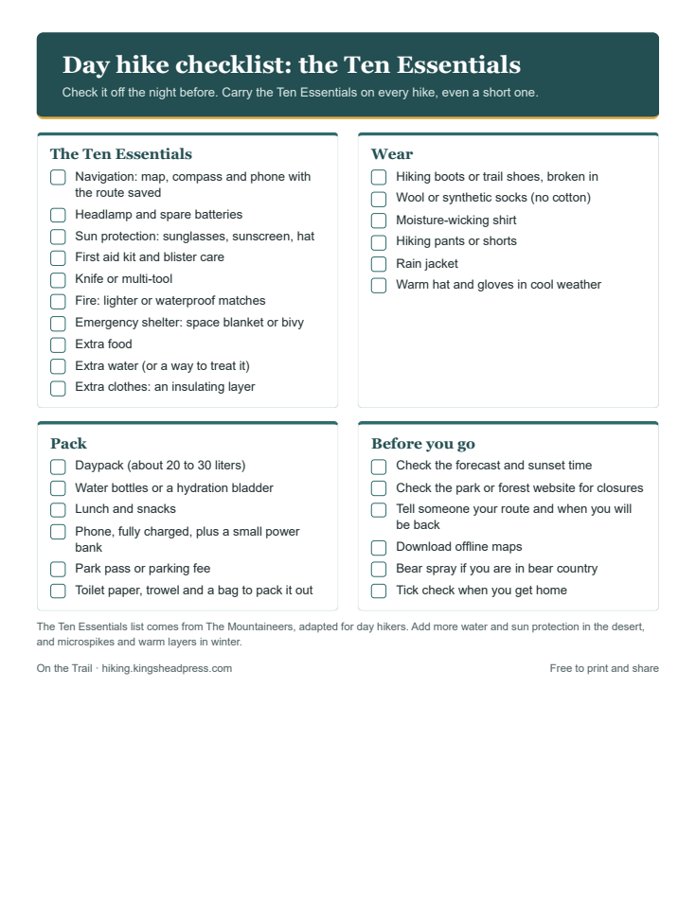
Free printable
Day hike checklist
One US Letter page with the Ten Essentials, what to wear, what to pack and what to check before you leave home.
What’s worth buying
Some links on this page go to Amazon. If you buy through them, King’s Head Press may earn a small commission at no extra cost to you. We only suggest things that are worth having.
Start with these
- A comfortable daypack (20 to 30 liters)Big enough for the essentials, lunch and a jacket. Look for a hip belt and a chest strap.
- Hiking shoes or trail runnersGrip matters more than ankle height for most day hikes. Buy half a size up for swollen feet.
- Wool or synthetic hiking socksThe cheapest way to avoid blisters.
- A packable rain jacketDoubles as a windbreaker on a cold summit.
The small things
- HeadlampA rechargeable one with a red light mode lasts for years.
- Hiking first aid kitA small ready-made kit; add blister plasters and your own medicine.
- Emergency space blanketA few ounces that could keep you warm through a night out.
- Water filterLets you refill from streams on longer hikes.
- Trail mapWaterproof maps for most National Parks and many forests.
- Baseplate compassLight, cheap and never needs charging.
- Trekking polesSave your knees on the way down.
- Small power bankKeeps your phone alive for maps and photos.
Extras by season and place
- Desert: twice the water you think, electrolytes, a wide-brimmed hat and a light long-sleeved shirt.
- Winter: microspikes for icy trails, warm gloves, a spare hat and a thermos.
- Bear country: bear spray in a holster you can reach, not in your pack.
- Tick country: long pants, insect repellent and a tick remover.
Hiking with a dog? See hiking with your dog for their kit.